
Home Desks & Workspace
Desks & Workspace
Compact desks for small home offices
Measure the room, test chair clearance, and compare desk styles based on how you work or study.
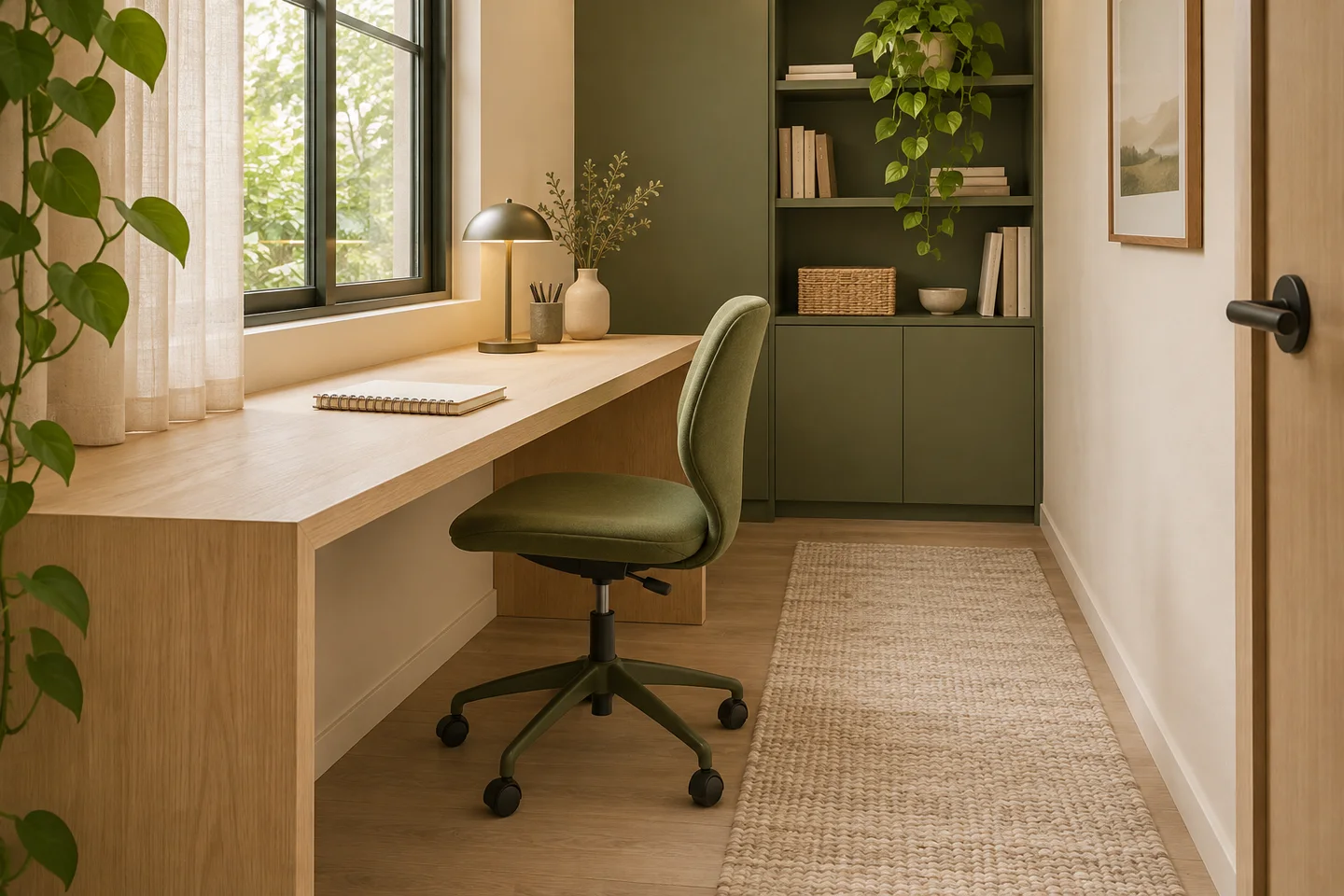
Find the guide that fits your room
Measure and compare
Start with the widest desk that still lets you open nearby drawers and pull the chair out.
Choose a room layout
Test the layout with the chair, doors and furniture in their real positions.
Fit the chair and the work surface
Check what you sit on and which tools need to stay within reach.
Measure the room first
Write down the width along the wall and the depth you can use. Measure from the baseboard if it pushes furniture forward. Open nearby doors and drawers, and pull your chair back before deciding how much floor area is available.
Match the desk to your setup
A laptop-only setup can work on a shallow surface. For a monitor and separate keyboard, compare the depth of the monitor stand and the space you need for your forearms. Check legroom under drawers and crossbars.
Compare desk styles
A slim writing desk is easy to move. A corner desk can add usable surface in a tight room if the return does not interrupt a walkway. A wall-mounted drop-leaf desk frees floor space when folded and needs suitable wall support.
Match the desk to your daily tasks
| Your main task | Test before buying |
|---|---|
| Laptop work | Open a notebook next to your laptop and use the mouse with your elbow relaxed. |
| Monitor and keyboard | Put the monitor stand, keyboard and cable bends inside the taped footprint. |
| Writing and study | Open your largest book and check there is room to take notes beside it. |
| Shared workspace | Pull the chair back and test the walkway while another person passes. |
Compare compact desks on Amazon US
As an Amazon Associate I earn from qualifying purchases.
Start with a shallow desk for a laptop setup. Compare a wider work surface if you need room beside the keyboard.
- Shallow laptop desks (paid link)
- 40-inch writing desks (paid link)
- Compare two compact desks